
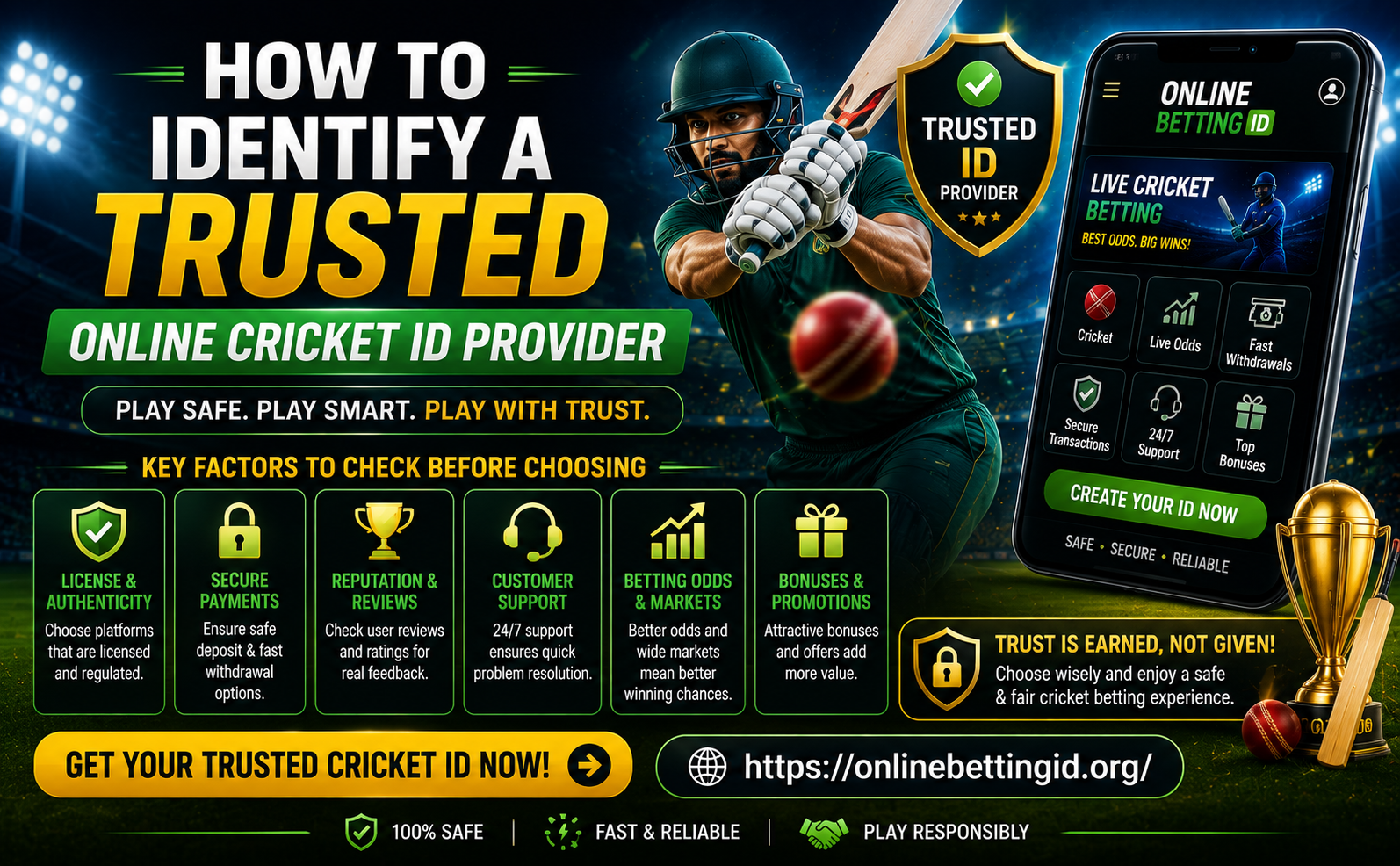
Finding an online cricket platform is easy. Finding one that you can actually trust is a different matter.
With so many websites using terms such as Online Cricket ID, Online Betting ID, IPL Cricket ID, and Cricket Betting ID, it can be difficult for a new user to understand which platforms are reliable and which ones should be approached with caution.
A professional-looking website does not automatically mean that a service is trustworthy. Some platforms may have attractive designs, fast-loading pages, and plenty of promotional claims, while offering very little information about security, privacy, support, or the organization operating the service.
That is why it is worth doing a little research before creating an account or sharing personal information.
This guide explains the main things to look for when evaluating an online cricket-related platform, so you can make a more informed decision and protect your account and personal details.
What Is an Online Cricket ID?
An Online Cricket ID generally refers to an account or login identity used to access an online cricket-related platform or service.
Depending on the website, an ID may provide access to features such as cricket information, live updates, statistics, account dashboards, or other online services. The exact features can vary considerably from one provider to another.
The important point is that the term “Cricket ID” itself does not guarantee that a provider is legitimate.
Anyone can use the term on a website. Therefore, users should look beyond the name and examine the actual service behind it.
Why Choosing a Trusted Provider Matters
Your account may contain personal information, contact details, transaction-related information, or login credentials. Giving these details to an unreliable website can create unnecessary risks.
A trustworthy provider should make its policies and business information reasonably clear.
For example, imagine two websites offering a similar Online Betting ID service. The first clearly explains its privacy policy, terms of use, customer-support process, and account-security measures. The second provides almost no information beyond a registration form and a contact number.
Even before considering the services themselves, the first website gives you more information to evaluate.
Transparency is therefore one of the strongest indicators to look for.
1. Check Whether the Website Provides Clear Information
Start with the website itself.
A reliable platform should not make you guess who operates it or how the service works. Look for dedicated pages explaining important information such as:
- About the company or service
- Terms and conditions
- Privacy policy
- Contact information
- Customer-support options
- Account-related procedures
- Applicable restrictions or eligibility requirements
You should also check whether the information appears consistent across different pages.
If a website makes major claims but provides no supporting details, treat that as a reason to investigate further.
2. Look for Secure Website Connections
Website security is another important consideration.
Before entering your email address, phone number, password, or other personal information, check whether the website uses HTTPS.
You can normally see a padlock symbol beside the website address in your browser.
HTTPS helps protect information while it travels between your browser and the website. However, there is an important distinction to remember:
HTTPS does not prove that a website itself is trustworthy.
Even an unreliable website can use an SSL certificate.
Think of HTTPS as one security indicator rather than proof of legitimacy.
3. Examine the Privacy Policy
Many people skip privacy policies because they appear lengthy and complicated. However, when choosing an online platform, this is one section worth checking.
A useful privacy policy should explain what information the website collects, why it collects that information, how information is stored, and under what circumstances information may be shared.
Pay particular attention when a platform asks for more information than you would reasonably expect.
For example, if a simple account requires extensive personal details without a clear explanation, take a step back and investigate before continuing.
Your personal information has value, so it should not be shared casually.
4. Check Customer Support
Good customer support is another useful indicator of how seriously a platform treats its users.
A provider should ideally offer a clear way to contact support and explain when or how users can expect assistance.
Look for:
- A dedicated support channel
- Clear contact information
- Reasonable response times
- Helpful answers rather than automated messages only
- Clear procedures for account-related problems
You can even contact support before registering.
Ask a simple question about the service and see how they respond.
If the representative provides a clear and professional answer, that can be a positive sign. If they avoid basic questions, pressure you to act immediately, or refuse to explain important policies, consider that a warning sign.
5. Don’t Trust Unrealistic Promises
One of the easiest ways to identify a questionable website is to look at its promises.
Be particularly careful with statements suggesting guaranteed results, guaranteed income, instant benefits without conditions, or unusually generous offers.
A trustworthy service should explain its features realistically rather than relying on exaggerated claims.
For example, phrases such as “100% guaranteed” or “zero risk” should immediately make you more cautious.
No legitimate online service should require you to ignore common sense simply because an offer sounds attractive.
6. Research the Provider Independently
Don’t rely entirely on testimonials published on the provider’s own website.
Search for independent information about the platform.
You can look for:
- User experiences
- Independent reviews
- Complaints
- Security discussions
- Website history
- Company information
- Reports about account or support problems
However, remember that online reviews can also be manipulated.
A website having hundreds of positive reviews does not automatically prove that every review is genuine. Look for patterns across several independent sources rather than relying on one review page.
7. Pay Attention to the Website’s Age and Reputation
A recently created website is not necessarily unsafe. Every legitimate business was new at some point.
However, a very new domain with little history deserves additional attention.
Try to understand how long the service has been operating and whether there is a consistent online presence.
A provider with transparent information, an established history, and consistent communication is generally easier to evaluate than an anonymous website that appeared recently and provides very little background information.
8. Be Careful With Your Login Credentials
Once you create an account, protecting your Online Betting ID or other account credentials becomes your responsibility as well.
Use a strong, unique password instead of reusing the password from your email or social-media accounts.
A good password should ideally contain a combination of:
- Uppercase letters
- Lowercase letters
- Numbers
- Special characters
Never share your password or one-time verification codes with another person.
If someone claiming to be customer support asks for your password or security code, verify the request through the platform’s official support channel before doing anything.
9. Check the Platform’s Mobile Experience
Many people access cricket platforms from smartphones rather than desktop computers.
A trustworthy service should provide a reasonably clear mobile experience.
Pay attention to whether:
- Pages load properly
- Navigation is understandable
- Login works consistently
- Important information is easy to find
- Security warnings do not appear
- The website behaves normally on your browser
A poor mobile experience does not necessarily mean a platform is fraudulent, but broken pages, constant redirects, suspicious pop-ups, and unexpected downloads are reasons to be cautious.
10. Understand the Difference Between an ID and a Provider
Another common mistake is assuming that having an ID automatically means the provider is reliable.
It doesn’t.
An IPL Cricket ID, for example, is simply an account identifier associated with a particular platform. The important question is who operates the platform, what services it provides, how it handles user information, and whether its activities are lawful in your location.
The same applies to a Cricket Betting ID.
The name of the ID is not a guarantee of security or legitimacy. Always evaluate the provider separately.
11. Verify Legal and Regional Requirements
Rules surrounding online cricket-related services can differ depending on the country and, in some cases, the user’s specific state or jurisdiction.
Before using any service involving regulated activities, check the laws and restrictions that apply to your location.
A website being accessible from your country does not necessarily mean every feature is legally available to you.
Responsible users should therefore understand the applicable requirements rather than assuming that online availability equals legal availability.
12. Watch for Common Warning Signs
Sometimes the easiest way to evaluate a platform is to identify what feels unusual.
Be cautious if you notice several of these signs together:
- No clear company information
- Missing privacy policy or terms
- Pressure to register immediately
- Unrealistic guarantees
- Poor customer support
- Suspicious redirects
- Requests for unnecessary personal information
- Constant pop-ups
- Unclear account procedures
- No independent reputation
- Claims that cannot be verified
One warning sign alone may not tell the whole story. Several warning signs together, however, should encourage you to stop and investigate.
A Simple Checklist Before Creating an Account
Before registering with an Online Cricket ID provider, ask yourself these questions:
Is the website transparent?
Can you easily find information about the service and its policies?
Is the website secure?
Does it use HTTPS and follow reasonable security practices?
Can I contact support?
Is there a genuine and clearly explained support channel?
Can I find independent information?
Are there credible discussions or reviews outside the provider’s own website?
Does the website make unrealistic promises?
If something sounds too good to be true, investigate carefully.
Does the service comply with local requirements?
Make sure you understand the laws and restrictions that apply where you live.
Am I comfortable sharing my information?
If you are uncertain, don’t rush into registration.
Taking a few minutes to answer these questions can prevent much bigger problems later.
Read More : Online Betting ID vs Sky Exchange vs Reddy Anna vs Parimatch: An Informational Comparison Guid | Online Cricket ID vs Other Platforms: Which One Is Better in 2026?
Final Thoughts
Choosing an online cricket platform should never be based only on a catchy name, attractive design, or a promotional message.
Whether you are searching for an Online Cricket ID, Online Betting ID, IPL Cricket ID, or Cricket Betting ID, the same basic principles apply: check transparency, protect your personal information, research the provider independently, examine its security practices, and understand the rules that apply to you.
Most importantly, don’t let urgency influence your decision.
A trustworthy service should give users enough information to make an informed choice. If a website pressures you to register quickly, refuses to answer basic questions, or makes unrealistic promises, there is nothing wrong with stepping away and researching alternatives.
The few minutes you spend checking a platform’s background can be far more valuable than rushing into an account without understanding who is behind it.
In the online world, being cautious isn’t complicated. It simply means asking the right questions before you click Register.